Bullying Accountability

Child Safety • Teacher Protection • Institutional Responsibility
A public-interest site documenting bullying-related institutional failures, retaliation against reporters, and the need for accountability in schools and other child-serving systems.
The Law
This page explains the legal claims, or “counts,” in MacMillan v. Kingsley Montessori School and provides a plain-language guide to how a civil lawsuit works. It is intended for students, the public, and members of the press who want to understand the legal structure of the case without needing to read every court filing first.
Press Quote by MacMillan:

“At heart, I am an educator. I built the Bullying Accountability website to help students, parents, and the public understand how school accountability systems work — and how they can fail. I believe that clear, freely available information helps communities become safer, more transparent, and more just. My hope is that this site gives children and families the language and context they need to ask better questions, recognize retaliation when it happens, and help make their schools safer for everyone.”
Why This Case Matters
This case sits at the intersection of child safety, teacher protection, and institutional responsibility.
For students, it shows how laws are organized and how courts process civil claims.
For the public, it raises questions about what happens when a school’s internal response to bullying is itself challenged.
For the press, it provides a roadmap to the legal claims, procedural status, and larger public issues without requiring readers to begin with a 75-page complaint.
The core question is simple:
Can schools protect children from bullying if teachers are not protected when they report it?
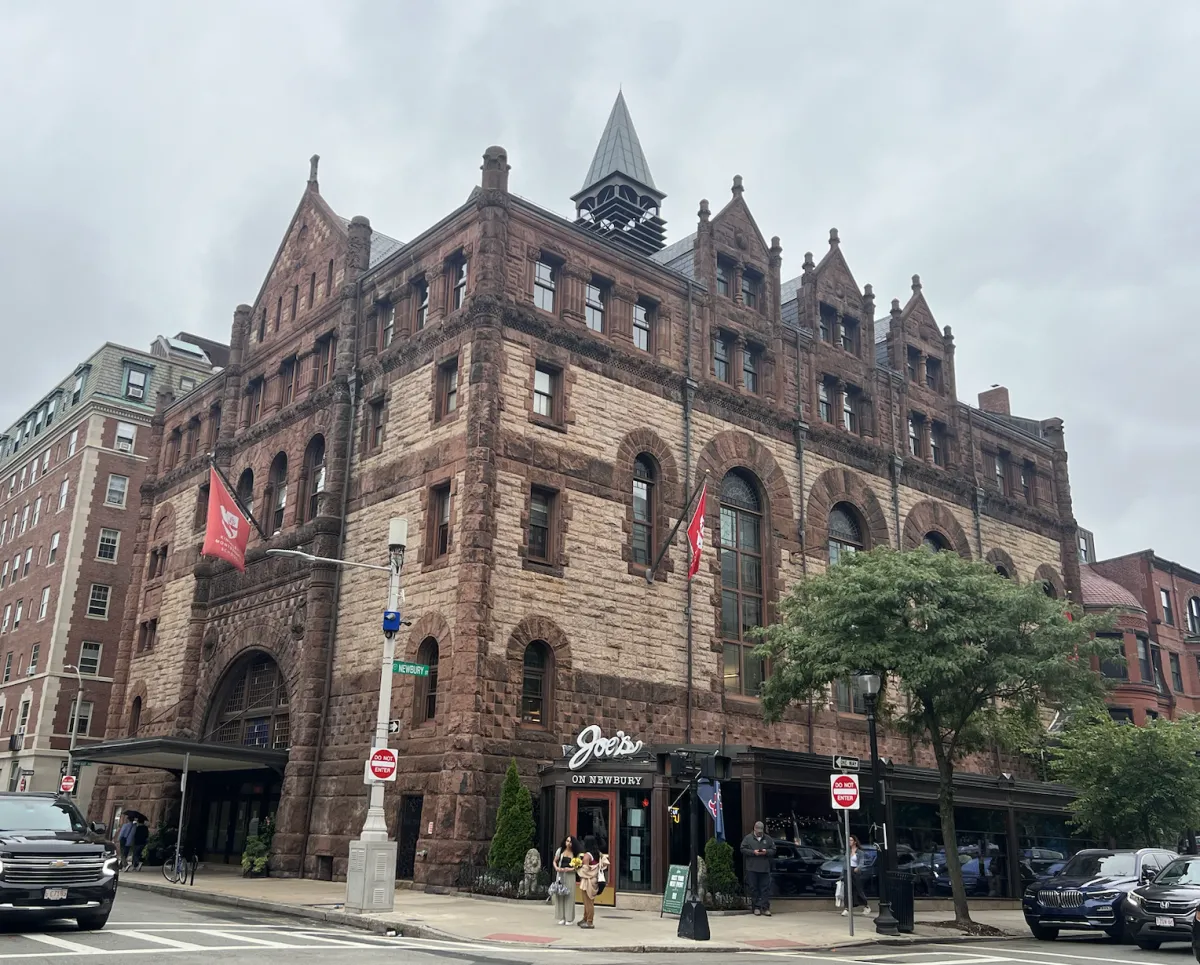
Kingsley Montessori School Sits at the Intersection of Newbury Street and Exeter Street in Boston
How Lawsuits Are Organized
A civil lawsuit usually begins with a complaint. The complaint identifies the parties, describes the facts the plaintiff alleges, states the legal claims being brought, and asks the court for relief. In Massachusetts, a person starts a lawsuit by filing a complaint with the clerk of the court. (Massachusetts Government)
The legal claims in a complaint are often organized into sections called counts. A count is not a criminal charge. It is a civil cause of action: a specific legal theory explaining why the plaintiff believes the defendant should be held legally responsible.
In this case, MacMillan’s Superior Court complaint brought five counts: retaliation, wrongful termination in violation of public policy, defamation, intentional infliction of emotional distress, and breach of statutory duty / negligent failure to investigate.
What Happened Procedurally
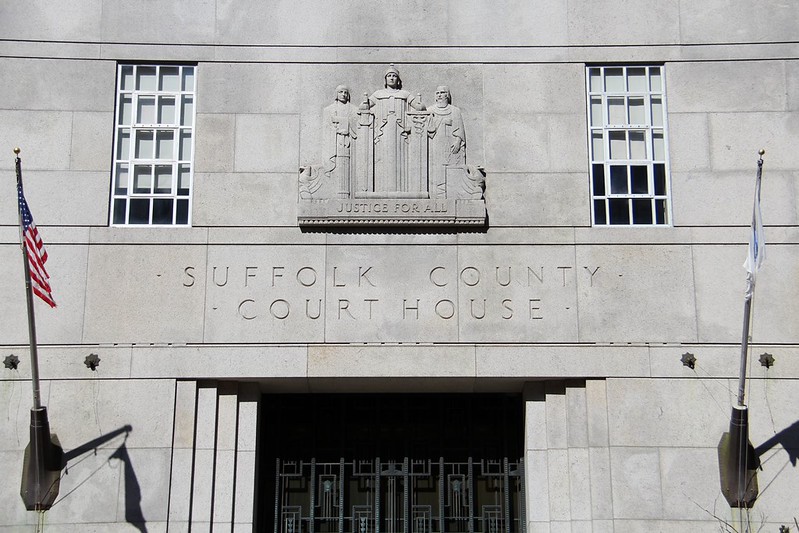
Suffolk County Courthouse at 3 Pemberton Square in Boston
Kingsley Montessori School moved to dismiss the case before discovery. A motion to dismiss is not a trial. It is an early request asking the court to decide whether the complaint states legally valid claims. Massachusetts Rule 12(b)(6) motions test the legal sufficiency of the complaint. (Massachusetts Government)
On March 23, 2026, the Superior Court allowed Kingsley’s Motion to Dismiss. On April 9, 2026, MacMillan filed a Notice of Appeal. (Bullying Accountability)
That means this case is now in an appellate posture. The trial court has dismissed the claims, and MacMillan is asking a higher court to review whether the dismissal was legally correct.
The Appeal: A Question of First Impression
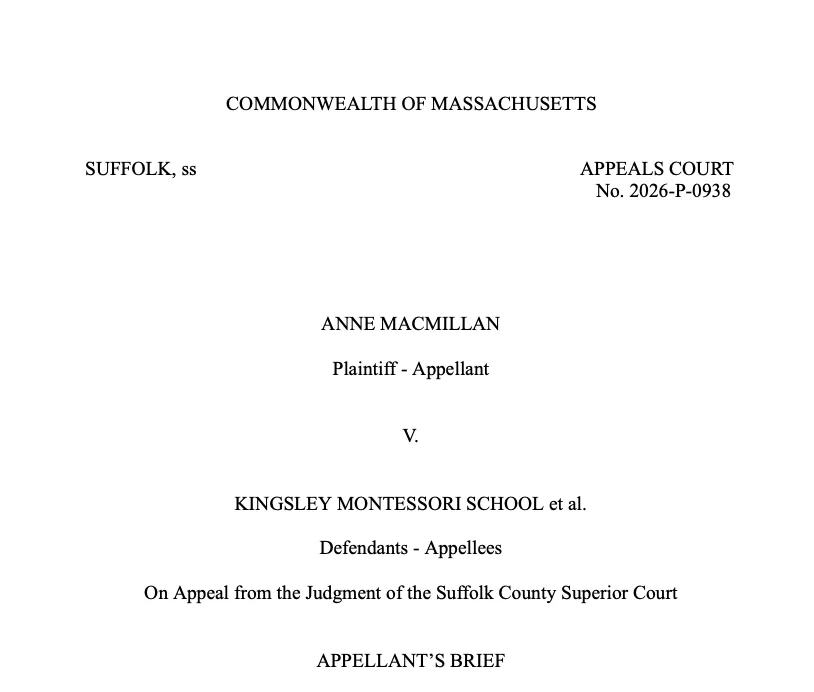
Appeals Court Docket No. 2026-P-0938
In law, a "question of first impression" is a legal issue that no appellate court in the jurisdiction has ever decided. There's no binding precedent either way — the court is writing on a blank slate.
This case presents one. Massachusetts courts have held that Section 37O, the state's mandatory bullying-reporting law, doesn't create its own private right to sue. But no Massachusetts appellate court has ever decided whether that same limitation also wipes out a separate, long-standing common-law protection: that an at-will employee cannot be fired for doing what the law requires them to do. Those are two different legal questions, and the Superior Court's dismissal treated them as one and the same.
How the Appeals Court answers this will matter beyond this case. Teachers, aides, and staff at any Massachusetts private school are required by law to report bullying. Whether they can be fired for it without any legal remedy — or whether the law that requires the report also protects the person making it — has never been settled.
The Legal Background
Massachusetts General Laws Chapter 71, Section 37O defines bullying as repeated written, verbal, electronic, physical, or gestural conduct by students or school staff that causes harm, creates fear, creates a hostile school environment, infringes rights at school, or disrupts education. The statute also explicitly prohibits retaliation against a person who reports bullying, provides information during an investigation, witnesses bullying, or has reliable information about bullying. (Massachusetts Legislature)
The law requires school districts, charter schools, non-public schools, approved private schools, and collaborative schools to develop, follow, and update bullying prevention and intervention plans. Those plans must include clear reporting procedures, anonymous reporting options, prompt investigation procedures, safety-restoration procedures, parent-notification procedures, disciplinary consequences, and strategies to protect people who report bullying or provide information. (Massachusetts Legislature)
This statute is central to the case because MacMillan alleges that she reported bullying and administrative non-response, and that Kingsley retaliated instead of investigating.
What is Retaliation?
Retaliation means punishing someone because they reported a problem, told the truth, helped with an investigation, or stood up for someone who was being harmed.
Retaliation is different from a regular consequence. A regular consequence happens because someone broke a fair rule. Retaliation happens because someone spoke up.
For example, retaliation can look like:
A student reports bullying, and other students exclude them for “telling.”
A witness shares what they saw, and people threaten them to stay quiet.
A parent asks for an investigation, and the school starts treating the parent as the problem.
A teacher reports bullying, and the school begins treating the teacher as disloyal, difficult, or unsafe to trust.
An adult raises a safety concern, and the institution responds by damaging that person’s reputation instead of addressing the concern.
The key question is not only, “What happened next?” It is also, “Why did it happen?”
If a person is treated badly because they reported bullying, provided information, witnessed bullying, or refused to stay silent about harm, that may be retaliation.
In a school, retaliation is especially serious because it teaches the whole community that speaking up is dangerous. Students may become afraid to report bullying. Teachers may become afraid to protect students. Parents may become afraid to ask questions. When that happens, the reporting system stops working.
In this lawsuit, MacMillan alleges that Kingsley retaliated against her after she reported bullying and administrative failure to respond.
Kingsley denies legal liability, and the trial court dismissed the case. MacMillan has appealed. The purpose of this page is to explain the legal claim, not to ask readers to assume that the allegation has already been proven.

Plaintiff Anne MacMillan standing on Exeter Street in Boston beside a Kingsley advertisement featuring her teaching in March 2023.
The complaint alleges that retaliation was already underway at this time. Only weeks later, MacMillan was terminated — in the middle of the school year.
The central question behind the retaliation count is this:
Can a school’s anti-bullying system work if the adults who report bullying can be punished for doing so?
Retaliation and Teacher Protection
The central public question in this case is whether a private-school teacher who reports bullying and administrative failure can be fired, discredited, or professionally harmed without the school facing meaningful legal accountability.
MacMillan’s position is that Chapter 71, Section 37O cannot function if teachers are required to report bullying but can be punished for doing so.
Kingsley’s position, as reflected by its motion practice, was that MacMillan’s claims should be dismissed as a matter of law.
The Superior Court dismissed the case. MacMillan has appealed.
The Counts at A Glance
The legal claims in a complaint are often organized into sections called counts. A count is not a criminal charge. It is a civil cause of action: a specific legal theory explaining why the plaintiff believes the defendant should be held legally responsible.
In this case, MacMillan’s Superior Court complaint brought five counts: retaliation, wrongful termination in violation of public policy, defamation, intentional infliction of emotional distress, and breach of statutory duty / negligent failure to investigate.
Count I: Retaliation
MacMillan alleges she was retaliated against after reporting student bullying, administrative misconduct, and the withholding of material safety information from a child’s parents. Kingsley argued the report was not protected activity under Chapter 151B, and Judge Campbell dismissed the retaliation count.
MacMillan's Position
MacMillan’s position is that she was in good standing before she reported the bullying concerns. In the complaint, she alleges that she had recently been promoted to Lead Co-Teacher, had received positive feedback, and had no disciplinary history or pending concerns. She alleges that changed after October 31, 2022, when she made a verbal report to Human Resources about student mistreatment and the school’s failure to address or disclose it.
At the hearing, MacMillan described the report this way: she said she reported “ongoing student mistreatment” and Defendant Tara Brennan’s refusal to allow disclosure of “material safety information” to the child’s parents. She also told the court that some protected-class-related information was under impoundment to protect the families involved.
MacMillan argues that the retaliation began after that report. She points to the sudden eight-day classroom observation, the accusation of “misalignment,” the later reframing of her written documentation as “insubordination,” the rescission of her appointment, and her April 7, 2023 termination by courier. Her position is that the school did not investigate the underlying child-safety concern. Instead, she alleges, it investigated and punished the teacher who reported it.
MacMillan also argues that the anti-bullying statute matters even though it does not create its own private lawsuit. Her position is that G.L. c. 71, § 37O still defines what schools and staff are supposed to do: staff are required to report bullying or retaliation, schools must have clear reporting procedures, reports must be investigated, and retaliation against reporters is prohibited.
Kingsley's Position
Kingsley argued that Count I should be dismissed because MacMillan’s report was about student bullying and administrative handling of bullying, not protected activity under Chapter 151B. In Kingsley’s view, Chapter 151B protects employees who oppose discrimination covered by that chapter, not employees who report bullying under the school anti-bullying statute.
Kingsley also argued that the Massachusetts anti-bullying statute does not create a private right of action. Its position was that Counts I and V were, in substance, attempts to sue under G.L. c. 71, § 37O, even though the statute says it does not create a private lawsuit.
Kingsley relied heavily on the MCAD’s no-probable-cause finding.
Kingsley relied heavily on the MCAD’s no-probable-cause finding. The MCAD disposition said Kingsley had provided evidence of legitimate, non-discriminatory reasons for termination, including concerns about MacMillan’s communications and insubordination, and stated that it did not find protected Chapter 151B activity before MacMillan’s MCAD filing. MacMillan disputes the reliability of that finding, as explained below.
The Confidentiality Trap
Teachers are required to protect student and family confidentiality. That is right. Children should not have their private information placed on the public record just because a school failed to respond properly.
But this case shows the danger of turning that confidentiality duty against the reporting teacher. MacMillan’s position is that protected-class-related information was intentionally kept out of the public complaint and placed in impounded materials to protect minor children and their families. At the hearing, she told the court that the protected-class information for the Chapter 151B claim was already “under impoundment” and “intentionally does not exist on the Public Record” for that reason.
The public concern is simple: if teachers must keep protected student information confidential, but schools can then argue that no protected-class information exists because the teacher did not place it publicly on the record, the children most in need of protection become less protected. Confidentiality should protect children. It should not become a legal shield for institutions or a trap for teachers who report mistreatment.
MacMillan's Response to the MCAD Finding
MacMillan disputes Kingsley’s reliance on the MCAD’s no-probable-cause finding. Her lawsuit and opposition allege that Kingsley’s MCAD submissions included material omissions, mischaracterizations, and false narratives that were never tested through witness testimony or discovery. MacMillan also alleges that the MCAD made substantive errors, including misstating the date of her protected activity as January 19, 2023, when she says the protected report was made verbally to Human Resources on October 31, 2022.
MacMillan’s position is that this matters because the Superior Court dismissed the case at the Rule 12(b)(6) stage, before discovery, witness testimony, or factual testing of the allegations. In plain English: Kingsley relied on the MCAD’s no-probable-cause finding, but MacMillan argues that the MCAD finding itself relied on an incomplete and inaccurate record.
Judge Cathleen E. Campbell's Position
Judge Campbell dismissed Count I. In the order, she accepted that MacMillan reported bullying to Human Resources on October 31, 2022, and that MacMillan considered the report protected whistleblower activity under the Massachusetts anti-bullying statute. But the judge ruled that this did not state a retaliation claim under Chapter 151B.
Judge Campbell dismissed the c. 151B retaliation claim. She ruled that reporting bullying, even bullying that raises a student-safety concern, is not protected activity under c. 151B unless it is tied to opposition to discrimination based on a protected class. MacMillan’s position is that the protected-class information was intentionally kept out of the public complaint to protect the confidentiality of minor children and was instead placed in impounded materials. The order did not acknowledge that protected-class-related information when dismissing the c. 151B claim.
In plain English: the judge did not decide whether the bullying report was morally important or whether the school handled it well. She decided that, as pleaded, the retaliation count did not fit within Chapter 151B, and that the anti-bullying statute itself did not create a private lawsuit.
MacMillan’s position is that the ruling treated her report as a general bullying complaint, while her claim was that the report also involved protected-class-related mistreatment and retaliation. She says the most sensitive protected-class information was intentionally placed in impounded materials to protect minor children and families, not omitted because it did not exist.
MacMillan also argues that the claim was dismissed too early. Because the case was at the Rule 12(b)(6) stage, she believes the court should have accepted her well-pleaded allegations as true and allowed discovery before deciding whether her report was protected activity.
In plain English: the judge ruled that the retaliation claim did not fit Chapter 151B and could not proceed as a private lawsuit under the anti-bullying statute. MacMillan argues that this missed her actual position: the protected-class information was in impounded materials, and she was relying on Chapter 151B and other existing remedies, not trying to sue directly under § 37O alone.
Why this Matters Beyond this Case

This count raises a public question: what happens when the law tells teachers to report bullying, but the teacher says she was punished after doing so?
Massachusetts law says school staff must report bullying or retaliation they witness or become aware of, and it says retaliation against someone who reports bullying is prohibited. But the same statute also says it does not create a private right of action.
That creates the first gap at the center of this appeal. If a private-school teacher reports student mistreatment and then loses her job, what legal remedy exists? Can the school treat the report as an internal workplace disagreement? Can the teacher rely on other laws, such as Chapter 151B or common-law wrongful termination, when the anti-bullying statute itself has no private lawsuit?
This case also raises a second gap: confidentiality. Teachers are required to protect student and family privacy, especially when minor children and protected-class information are involved. That is right. Children should not have their private information placed on the public record just because a school failed to respond properly.
But MacMillan’s position is that this confidentiality duty was turned against her. She says she intentionally kept protected-class-related information out of the public complaint to protect children and families, and placed sensitive information in impounded materials instead. Kingsley then argued that her report was only about “bullying,” not protected activity under Chapter 151B. Judge Campbell dismissed the Chapter 151B retaliation claim without acknowledging the protected-class-related information MacMillan says was contained in the impounded materials.
For parents and teachers, the concern is simple: child-safety laws depend on adults being willing to speak. But if teachers can be punished for reporting, and then faulted for keeping children’s confidential information confidential, future reports may stop before they ever reach families, boards, courts, or regulators.
That makes vulnerable children less safe, not more safe. Confidentiality should protect children. It should not become a legal shield for institutions or a trap for teachers who report mistreatment.
Press Quotes By MacMillan
“Massachusetts law tells teachers to report bullying. This case asks what happens when a teacher says she did exactly that and lost her job.”
“I protected the children’s privacy, and that meant I could not put the most sensitive facts in the public record. But that silence should never be used to make a child-safety report look vague or unimportant.”
“No teacher should have to choose between reporting student mistreatment and keeping a career.”
“This is not only about my termination. It is about whether child-safety reporting has any real protection in private schools.”

Count II: Wrongful Termination in Violation of Public Policy
MacMillan alleges she was terminated for fulfilling legal and ethical duties connected to student safety. Kingsley argued that MacMillan was an at-will employee, was terminated for workplace conduct issues, and that her bullying-related reports were internal school matters that could not support a wrongful termination claim.
MacMillan's Position
MacMillan’s position is that she was not fired over an ordinary workplace disagreement. She alleges she was terminated because she reported student mistreatment, objected to retaliation, and tried to fulfill her legal and ethical duties as a teacher.
MacMillan alleges she was in good standing before the report. She had recently been promoted to Lead Co-Teacher, with support from colleagues and administrators. In her opposition, she argued that this promotion mattered because it undermined Kingsley’s later claim that her termination resulted from long-standing workplace conduct problems rather than retaliation after protected reporting.
In the complaint, MacMillan says her termination “was not based on job performance,” but was a direct result of her effort to advocate for student safety and report misconduct through internal channels. She argues that Massachusetts public policy protects employees who are fired for doing what the law requires, refusing to violate the law, or asserting legally protected rights.
MacMillan does not dispute that she was an at-will employee. Her argument is that at-will employment has a narrow public-policy exception, and that child-safety reporting falls within it. She argues that G.L. c. 71, § 37O matters not because it gives her a direct private lawsuit, but because it shows the public policy she was trying to follow. At the hearing, she told the court: “Count 2 is a Common Law Wrongful Termination claim, not a private lawsuit under 37O.”
MacMillan’s position is also that the internal-reporting label is unfair. The anti-bullying statute itself requires school staff to report bullying or retaliation to the principal or designated school official, and requires the school to promptly investigate. So if a teacher follows the required internal reporting pathway, MacMillan argues that the report should not be dismissed as merely an “internal workplace disagreement.”
MacMillan also disputes Kingsley’s argument that DESE is the exclusive practical remedy. Her Count II claim was not a direct lawsuit under § 37O and did not ask the court to enforce the anti-bullying statute for its own sake. It was a common-law wrongful termination claim brought by a teacher who alleges she was fired after making a required child-safety report. MacMillan argues that § 37O’s no-private-right-of-action clause does not erase other legal remedies, especially because the same sentence says the statute does not “supersede or replace existing rights or remedies under any other general or special law.”
MacMillan further disputes Kingsley’s description of the oversight structure for private schools. Kingsley made DESE sound like a direct and complete enforcement route. MacMillan states that, after speaking with DESE, she understood the oversight chain differently: because Kingsley is a Boston private school approved by the Boston School Committee, BPS has oversight responsibility for that approval, and DESE’s role is to address the public authority’s oversight rather than act as a direct civil remedy against Kingsley. Massachusetts DESE guidance says regular private schools must obtain approval from the school committee of the city or town where the school is located, and that DESE “does not review, monitor, or investigate school committee decisions regarding private school approval.”
MacMillan also disputes Kingsley’s DESE-only framing as overbroad. Her Count II claim was not a direct lawsuit under § 37O and did not ask the court to enforce the anti-bullying statute for its own sake. It was a common-law wrongful termination claim brought by a teacher who alleges she was fired after making a required child-safety report. MacMillan argues that Kingsley used the statute’s no-private-right-of-action clause to suggest that no courtroom remedy was available at all, while minimizing the same sentence’s preservation of “existing rights or remedies under any other general or special law.”
MacMillan also argues that this issue could not fairly be resolved at the Rule 12(b)(6) stage. Her position is that the court was required to accept her well-pleaded allegations and reasonable inferences as true — including her allegation that she was terminated because she reported student mistreatment and school noncompliance. She argues that Kingsley’s framing turned child-safety reporting into an internal workplace dispute before discovery, witness testimony, or judicial fact-finding had occurred.
Kingsley's Position
Kingsley argued that Count II should be dismissed for two main reasons.
First, Kingsley argued that MacMillan was not terminated for protected child-safety reporting. Kingsley’s position was that she was terminated for workplace conduct issues, including communication problems, insubordination, internal complaints, lack of accountability, and violation of Kingsley’s Code of Conduct. Kingsley relied heavily on the MCAD’s no-probable-cause finding, which stated that Kingsley had provided evidence of legitimate, non-discriminatory reasons for terminating MacMillan’s employment.
Second, Kingsley argued that even if MacMillan was terminated after reporting bullying, her claim still failed because her report was an internal school dispute about how Kingsley handled bullying. Kingsley argued that internal policy disagreements, even about socially desirable issues such as student safety, do not support a wrongful termination claim under Massachusetts law.
Kingsley also argued that MacMillan was trying to get around the anti-bullying statute’s no-private-right-of-action clause. Kingsley’s position was that the public policy MacMillan relied on was the same public policy contained in G.L. c. 71, § 37O, and that because the statute does not create a private right of action, MacMillan could not use that same statute as the basis for a wrongful termination claim. Kingsley described this as an improper “end-run-around” the statute’s prohibition of private lawsuits.
Kingsley also argued that the Legislature chose DESE, not private civil lawsuits, as the enforcement path for the anti-bullying statute. At the hearing, Kingsley’s attorney argued that DESE was meant to be the “enforcement wing” of the statute and that the statute’s no-private-right-of-action language barred MacMillan from using § 37O as the public-policy basis for a wrongful termination claim. MacMillan argues this framing went too far because Count II was not a direct § 37O enforcement claim.
Kingsley argued that the same no-private-right-of-action reasoning should apply to MacMillan’s wrongful termination claim, even though MacMillan was a teacher alleging she was fired after making a required child-safety report, not a parent or student trying to sue directly under § 37O.
At the hearing, Kingsley’s attorney framed the wrongful termination claim as “essentially the same claim” put into “Common Law clothes.” He argued that allowing the claim to go forward would turn the common-law wrongful termination claim “on its head” because the Legislature had already said there is no private right of action under the anti-bullying statute.
Kingsley also argued that courts should be cautious about interfering with private school decisions. Its position was that MacMillan’s claims would require the court to second-guess academic, disciplinary, and policy decisions made by school administrators. Kingsley therefore argued that Count II should be dismissed because MacMillan was an at-will employee, because the public-policy exception is narrow, because § 37O has no private right of action, and because her concerns were internal school matters rather than legally protected grounds for wrongful termination.
Legislative Intent Should Not Be Assumed
Kingsley argued that the Legislature deliberately chose DESE, not private courtrooms, as the enforcement path for bullying-law violations. MacMillan’s position is that this argument should not be accepted without careful review.
The statute does say § 37O creates no private right of action. But it also says it does not “supersede or replace existing rights or remedies under any other general or special law.” MacMillan argues that this matters because her wrongful termination claim was not a direct suit under § 37O. It was a common-law claim alleging that a teacher was fired for making a child-safety report the statute required her to make.
No interpretation of the statute should be based on a defense attorney's courtroom shorthand or untested claims about legislative intent. If schools argue that teachers have no courtroom remedy after reporting bullying, the public has a right to know so they can determine whether the Legislature actually intended that result.
What is a "Private Right of Action"?
A “private right of action” means a person can go to court and sue directly under a specific law.
Some laws create duties, but do not let private people sue directly to enforce those duties. Instead, enforcement may belong to a government agency or regulator.
That distinction matters here. Massachusetts’ anti-bullying statute says schools must address bullying and retaliation, and it prohibits retaliation against people who report bullying. But the statute also says it does not create a private right of action.
Kingsley argues that this means MacMillan cannot use the anti-bullying statute as the public-policy basis for a wrongful termination claim.
MacMillan’s response is different: she is not suing directly under the anti-bullying statute. She is bringing a common-law wrongful termination claim and arguing that the statute shows the public policy she was fired for trying to follow. She also points out that the same statutory sentence that says there is no private right of action also says the bullying law does not replace “existing rights or remedies under any other general or special law.”
In MacMillan’s case, the “other law” is the Massachusetts common-law public-policy exception to at-will employment: the rule that an at-will employee may still have a claim if she is fired for doing what the law requires, refusing to violate the law, or acting in accordance with a clearly established public policy.
In plain English: the dispute is not only whether the anti-bullying statute can be sued under directly. It is whether a school can fire a teacher for making a child-safety report the statute required her to make, and then use the statute’s no-private-lawsuit language to block a separate wrongful termination claim.
Judge Cathleen E. Campbell's Position
Judge Campbell dismissed Count II. She ruled that MacMillan was an at-will employee and that the public-policy exception did not apply.
In the order, the judge accepted for purposes of the motion to dismiss that MacMillan reported bullying concerns to Human Resources, that the concerns involved safety and policy, and that MacMillan alleged Kingsley did not properly respond and later terminated her. But the judge concluded that the reports were “internal matters at the school,” and therefore did not fit within the narrow public-policy exception to at-will employment.
The judge also relied on the anti-bullying statute’s no-private-right-of-action clause. Her ruling treated the public policy behind school bullying reporting as already contained within G.L. c. 71, § 37O, and concluded that MacMillan could not use that same policy to bring a separate wrongful termination claim.
MacMillan’s position is that this ruling was premature. The case was dismissed at the Rule 12(b)(6) stage, before discovery, witness testimony, or judicial fact-finding. At that stage, MacMillan argues, the court was required to accept her well-pleaded allegations and reasonable inferences as true — including her allegation that she was terminated because she reported student mistreatment and school noncompliance. Instead, the ruling treated the report as an internal school matter and relied on the same framing Kingsley advanced: that MacMillan’s concerns were workplace or policy disagreements rather than protected child-safety reporting.
MacMillan also argues that Kingsley’s reliance on the MCAD finding should not have resolved the factual dispute. Her complaint and opposition alleged that Kingsley’s MCAD submissions included material omissions and mischaracterizations, and that the MCAD relied on an incomplete record without discovery or witness testimony. The MCAD also misstated the date of MacMillan’s protected activity, which MacMillan says reversed the timeline and obscured the alleged onset of retaliation.
In plain English: MacMillan’s position is that the court did not simply decide a legal question. It accepted, too early, Kingsley’s characterization of the facts. Before any discovery or witness testimony, the court treated a teacher’s child-safety report as an internal workplace matter and dismissed the claim.
Why this Matters Beyond this Case

This count asks a simple but important question: when a teacher reports student mistreatment through the school’s own required channels, is that a protected child-safety report or just an internal workplace disagreement?
Massachusetts law requires school staff to report bullying or retaliation they witness or become aware of to the principal or designated school official. The law also requires the school to promptly investigate after receiving that report.
That means teachers are often required to report internally first. But if courts treat those internal reports as ordinary workplace disputes, the reporting duty loses much of its force. A teacher can be told by law to report, told by the school to use internal channels, and then told by the court that the report was too internal to support a wrongful termination claim.
For private-school teachers, the concern is especially serious. Many work under at-will appointment systems without the protections public school teachers may have. If a private school can terminate a teacher after a child-safety report and then frame the report as an internal policy disagreement, other teachers may learn the practical lesson: stay quiet.
That makes children less safe. A child-safety law depends on adults being willing to speak before harm grows worse. If the adult who reports can lose her job without a meaningful remedy, the reporting system protects the institution more than the child.
Press Quotes By MacMillan
“If Massachusetts law tells teachers to report bullying, then reporting bullying is not just an internal workplace disagreement. It is a public safety act.”
“At-will employment should not mean a school can fire a teacher for doing what child-safety laws require her to do.”
“I am not asking the court to run a school. I am asking whether a school can fire a teacher for reporting student mistreatment.”
“The public-policy exception exists for moments like this: when an employee says, ‘I was fired for doing what the law and basic child protection required.’"
Count III: Defamation — Libel & Slander
MacMillan alleges Kingsley and/or its representatives spread false statements that damaged her professional reputation as a teacher.
MacMillan's Position
MacMillan’s position is that Kingsley did more than terminate her employment. She alleges Kingsley created and spread a false narrative that she was terminated because of professional misconduct, rather than because she had reported student mistreatment, retaliation, and school noncompliance.
MacMillan alleges two kinds of defamation: slander, meaning spoken statements, and libel, meaning written statements.
For slander, MacMillan alleges that after her April 7, 2023 termination, Kingsley administrators, including but not limited to Stephen Farley and Tara Brennan, told faculty and staff that she had been terminated for “insubordination,” “misalignment,” or other alleged misconduct. She also alleges similar statements were made to parents, and that misleading statements were made to students suggesting she had chosen to leave.
MacMillan’s position is that these statements were false. She alleges that she did not abandon her students, behave unprofessionally, or engage in misconduct. She alleges that she was terminated after reporting bullying, submitting documentation, and asking for written justification for the rescission of her appointment. In her view, Kingsley’s use of words like “insubordination” and “misalignment” reframed protected reporting and documentation as professional misconduct.
For libel, MacMillan points to the April 13, 2023 email sent to parents by Board Chair Tara Jordan. That email said there was “no need for an independent investigation,” that the “one (and only) incident of student safety” had been handled appropriately, and that school leadership handled MacMillan’s termination “in accordance with school policies and values and applicable law.” MacMillan argues that this falsely conveyed to parents that her termination was lawful, justified, and based on a fair process.
MacMillan also argues that the context matters. A mid-year termination of an elementary school teacher is not ordinary. In that setting, saying or implying that a teacher was removed for “insubordination,” “misalignment,” or other misconduct can seriously damage the teacher’s reputation. Parents, colleagues, and students may reasonably assume the teacher did something grave enough to require immediate removal.
MacMillan’s position is that the complaint was specific enough at the pleading stage. She identified the substance of the statements, the approximate timing, the audiences, the written parent email, and the professional harm caused. She argues that more exact details — including who said precisely what in internal meetings — were within Kingsley’s control and should have been explored through discovery.
MacMillan also disputes Kingsley’s reliance on conditional privilege. Her position is that a school may have some privilege to communicate with staff or parents about a teacher’s departure, but that privilege cannot be used to knowingly or recklessly spread a false misconduct narrative. MacMillan argues that Kingsley abused any claimed privilege by discrediting the reporting teacher, reassuring parents that no real problem existed, and suppressing inquiry rather than neutrally communicating necessary information.
In plain English: MacMillan argues that Kingsley did not merely say she was gone. She alleges Kingsley gave the community a false reason to believe she had done something wrong.
Kingsley's Position
Kingsley argued that Count III should be dismissed because MacMillan had not pleaded defamation with enough specificity.
Kingsley’s position was that MacMillan’s allegations were too broad. It argued that she did not identify exact defamatory words, exact speakers, exact dates, or exact recipients. Kingsley argued that statements such as “insubordination” or “misalignment” were not enough to support a defamation claim.
Kingsley also argued that its communications were conditionally privileged. In plain English, Kingsley’s position was that employers and schools are allowed to communicate limited information about an employee’s departure when there is a legitimate business reason or shared concern.
Kingsley said the alleged statements were made in two limited contexts: first, to inform employees that MacMillan was no longer employed, and second, to address concerns raised by parents. Kingsley argued those audiences had a legitimate shared interest in the communication.
Kingsley also defended the April 13 parent email. Its position was that the email reassured parents about student safety, explained that an independent investigation was not needed, and stated that the school would not discuss the specific facts of MacMillan’s personnel matter out of respect for her privacy. Kingsley argued that the email did not attack MacMillan’s reputation and did not defame her.
At the hearing, Kingsley’s attorney argued that the school “did not defame her” and “did not slander her,” but simply notified parents that MacMillan had departed and that the school remained committed to student safety. Kingsley also argued there was no evidence of recklessness or actual malice sufficient to defeat conditional privilege.
In plain English: Kingsley’s position was that the school communicated carefully and appropriately about a teacher’s departure, and that MacMillan had not identified specific false factual statements that could support a defamation claim.
What are Libel, Slander, and Conditional Privilege?
Defamation means a false statement of fact that harms someone’s reputation.
Libel is written defamation.
Slander is spoken defamation.
Conditional privilege means a person or institution may be protected when making certain statements to people who have a legitimate shared interest in the topic. For example, a school may have some privilege to communicate with staff or parents about a teacher’s departure.
But MacMillan’s position is that conditional privilege should not protect knowingly false or reckless statements. Her argument is that the issue should have been tested through discovery, not dismissed before factual development.
Judge Cathleen E. Campbell's Position
Judge Campbell dismissed Count III.
The judge ruled that MacMillan had not identified defamatory statements with enough specificity. She stated that beyond the words “insubordination” and “misalignment,” MacMillan had not set out the exact words allegedly spoken, and had not sufficiently identified who made the statements.
The judge also treated “insubordination” and “misalignment” as opinions expressed by Kingsley, rather than as actionable false statements of fact. She concluded that those words could not support a defamation claim as pleaded.
As to the April 13 parent email, Judge Campbell ruled that the statements about “no need for an independent investigation” and the school’s handling of MacMillan’s termination could not be understood as attacking MacMillan’s reputation. She also ruled that MacMillan had not set forth enough facts to show the email was false.
The judge further ruled that even if the email could be viewed as defamatory, conditional privilege applied. She reasoned that Kingsley and the parents had a common interest in the subject because the email addressed student safety concerns and MacMillan’s departure.
MacMillan’s position is that this ruling was premature. The case was dismissed at the Rule 12(b)(6) stage, before discovery, witness testimony, or factual testing. MacMillan argues that the court should have accepted her well-pleaded allegations as true, including her allegations that Kingsley knew about sustained bullying, failed to investigate, falsely reduced the matter to one incident, and falsely presented her termination as lawful and appropriate.
MacMillan also argues that the court did not give enough weight to professional context. In her view, calling a teacher “insubordinate” or “misaligned” after an abrupt mid-year termination is not harmless opinion. In context, it signals professional unfitness.
In plain English: the judge ruled that MacMillan had not pleaded defamation clearly enough, and that Kingsley’s parent communication was protected. MacMillan argues that the judge resolved disputed facts too early and treated a false professional-misconduct narrative as if it were harmless personnel communication.
Why this Matters Beyond this Case
This count raises a public question: how much can a school say about a teacher after removing her, especially when the teacher alleges she was removed for reporting student mistreatment?
Schools have real reasons to communicate with parents and staff.
Parents need to know who is teaching their children. Children need stability. A school may need to reassure the community after a sudden classroom change.
But that communication power can be dangerous if it is used to protect the institution rather than tell the truth. A school does not need to publish every detail of a personnel matter to damage a teacher’s reputation. Sometimes a few carefully chosen words — “insubordination,” “misalignment,” “appropriate under the circumstances,” “no need for investigation” — can tell a community what it is supposed to believe.
For teachers, reputation is everything. A mid-year termination from an elementary classroom can carry a serious implied accusation even when no details are given. Parents may assume the teacher did something unsafe, unethical, or professionally disqualifying. Future employers may assume the same.
This matters because child-safety reporting often happens inside closed school communities. If a teacher reports mistreatment and the school can later control the narrative, the teacher may have no practical way to defend herself without violating student confidentiality. The school can speak broadly. The teacher is ethically constrained.
That creates a serious public concern. If schools can remove a reporting teacher, imply misconduct, and then use confidentiality and privilege to avoid factual testing, other teachers may stay silent. That protects institutional image, not children.

Press Quotes By MacMillan
“A mid-year termination of an elementary teacher tells a community that something serious happened. If that implication is false, the harm is real.”
“Confidentiality limited what I could say. Kingsley did not have the right to use my silence to create a false story about me.”
“This case asks whether a school can remove a reporting teacher, control the narrative, and avoid ever proving the story it told.”
“Teachers need to know that if they report student mistreatment, the institution cannot simply recast them as the problem.”
Count IV: Intentional Infliction of Emotional Distress (IIOD)
MacMillan alleges the retaliation, termination, isolation, and reputational harm were extreme and outrageous.
MacMillan's Position
MacMillan’s position is that Kingsley’s conduct was not an ordinary workplace conflict or routine personnel decision. She alleges that Kingsley responded to a child-safety report by escalating retaliation, building a false misconduct narrative, isolating her from the school community, and abruptly terminating her in a way that caused severe emotional and professional harm.
In the complaint, MacMillan alleges that Kingsley retaliated against her for protected activity related to student safety and administrative misconduct; launched a campaign to discredit her; used excessive surveillance, solicitation of negative feedback, and misrepresentation of her conduct; sent a termination letter by courier on a Friday evening; denied her the opportunity to say goodbye to her students or colleagues; made misleading or false statements about her absence; isolated her professionally and personally; and disseminated defamatory statements to justify her dismissal.
MacMillan alleges that these actions were especially harmful because Kingsley was not just any workplace. It was an elementary school community entrusted with the care of young children. MacMillan argues that ending a teacher’s relationship with young students without warning, while suggesting misconduct and refusing to investigate the underlying child-safety concerns, went beyond ordinary workplace distress.
MacMillan also argues that the Workers’ Compensation Act should not have barred this claim at the pleading stage. Her position is that Kingsley’s conduct included intentional retaliation, reputational harm, and post-termination conduct, not merely emotional distress arising from the normal conditions of employment. In her opposition, she argued that Kingsley’s position treated all emotional injury as a workplace injury, even where the alleged harm came from intentional falsification, coercive silence, reputational harm, and conduct after the employment relationship ended.
At the hearing, MacMillan argued that Count IV alleged “intentional calculated conduct designed to inflict distress and drive me out after I reported serious child safety related wrongdoing.” She also argued that the alleged conduct continued after termination and involved individual defendants acting beyond routine personnel action.
At the hearing, MacMillan argued that Count IV alleged “intentional In plain English: MacMillan argues that Kingsley did not merely fire her. She alleges Kingsley used the termination and its aftermath to punish, silence, isolate, and discredit a teacher who had reported student mistreatment.
What is The Workers' Compensation Issue?
Workers’ compensation usually covers injuries that arise out of employment. Kingsley argued that MacMillan’s emotional distress arose from her employment and termination, so workers’ compensation barred her civil claim.
MacMillan’s response is that the alleged harm was not merely a workplace injury. She argues it came from intentional retaliation, reputational harm, and post-termination conduct that should not have been swept into workers’ compensation at the pleading stage.
Kingsley's Position
Kingsley argued that Count IV should be dismissed for two reasons.
First, Kingsley argued that MacMillan’s emotional distress claim was barred by the Massachusetts Workers’ Compensation Act. Kingsley’s position was that emotional distress is a personal injury under workers’ compensation law, and that MacMillan’s alleged emotional injuries arose from her employment, the events leading to her termination, and the termination itself.
Kingsley argued that because MacMillan was an employee or former employee, and because the alleged distress arose out of the nature and conditions of her employment, workers’ compensation was the exclusive remedy. In its motion, Kingsley also noted that MacMillan had not submitted written notice at the time of hire reserving common-law rights.
Second, Kingsley argued that even if the Workers’ Compensation Act did not bar the claim, MacMillan’s allegations were not extreme or outrageous enough to state an IIED claim. At the hearing, Kingsley’s attorney argued that IIED requires conduct “beyond all bounds of decency” and “utterly intolerable in a civilized community,” and that MacMillan’s allegations did not reach that level.
Kingsley also argued that courts have dismissed IIED claims involving more severe allegations, including cases involving a school’s failure to investigate rape on campus or failure to prevent bullying. Kingsley’s position was that MacMillan’s allegations, even if accepted as pleaded, were still legally insufficient.
In plain English: Kingsley’s position was that MacMillan’s emotional distress claim belonged in the workers’ compensation system, not a civil lawsuit, and that the alleged conduct was not legally extreme enough for an IIED claim.

What is Intentional Infliction of Emotional Distress?
Intentional infliction of emotional distress, often called IIED, is a legal claim for emotional harm caused by extreme and outrageous conduct.
It is not enough for conduct to be unfair, upsetting, or harmful. Courts usually require conduct that goes far beyond ordinary conflict and is considered intolerable in a civilized community.
That high standard is one reason Count IV is difficult. MacMillan’s position is that Kingsley’s conduct was not ordinary workplace conflict because it involved alleged retaliation after a child-safety report, reputational harm, forced isolation from students and colleagues, and conduct continuing after termination.
Judge Cathleen E. Campbell's Position
Judge Campbell dismissed Count IV.
The judge first accepted Kingsley’s Workers’ Compensation Act argument. She ruled that MacMillan was barred from asserting intentional infliction of emotional distress because the claim was covered by the Massachusetts Workers’ Compensation Act.
The judge also ruled that, even if workers’ compensation did not bar the claim, the IIED claim still failed as a matter of law. The order summarized MacMillan’s allegations as including retaliation, a campaign to discredit her, a Friday termination letter denying her the opportunity to say goodbye to students and colleagues, misleading or false statements, isolation from the school community, and dissemination of defamatory statements.
Judge Campbell then applied the legal standard for IIED: the conduct must be extreme and outrageous, beyond all possible bounds of decency, and utterly intolerable in a civilized community. She concluded that even if all facts were assumed true, none of the alleged acts, individually or together, met that legal standard.
MacMillan’s position is that this ruling was premature. The case was dismissed at the Rule 12(b)(6) stage, before discovery, witness testimony, or factual development. MacMillan argues that the court treated Kingsley’s conduct as routine employment action before examining whether it was instead an intentional retaliatory campaign connected to child-safety reporting, reputational harm, and post-termination conduct.
In plain English: the judge ruled that MacMillan’s emotional distress claim was barred by workers’ compensation and, separately, that the alleged conduct was not extreme enough for an IIED claim. MacMillan argues that the court decided those issues too early and minimized the full context of the alleged retaliation.
Why this Matters Beyond this Case
This count raises a public question: when does workplace conduct stop being a normal employment dispute and become intentional harm?
Workers’ compensation laws exist to address many injuries that happen because of employment. But MacMillan argues that those laws should not become a shield for intentional retaliation, reputational harm, and post-termination conduct after a teacher reports child-safety concerns.
The distinction matters for teachers. If a school can retaliate against a reporting teacher, remove her from her students, control the narrative in the community, damage her reputation, and then say all emotional harm belongs only in workers’ compensation, teachers may have little protection from institutional retaliation.
This matters especially in schools because the harm is not only economic. Teachers build real relationships with children, families, and colleagues. An abrupt mid-year termination can sever those relationships overnight. If the institution then implies the teacher did something wrong, the emotional harm is tied to professional identity, trust, and reputation.
The public concern is simple: child-safety reporting depends on adults being willing to speak. If schools can make the reporting adult professionally and emotionally unsafe, future teachers may decide silence is safer than reporting.
That protects institutions, not children.

Press Quotes By MacMillan
“Workers’ compensation should not become a shield for institutions that intentionally retaliate against teachers who report child-safety concerns.”
“This was not ordinary workplace stress. I allege Kingsley used termination, isolation, and reputational harm to punish a teacher who spoke up.”
“A school community is not just a workplace. When a teacher is abruptly removed from young children and then portrayed as the problem, the harm is profound.”
“If schools can make reporting teachers emotionally and professionally unsafe, other teachers will learn to stay silent.”
“The law should not treat retaliatory destruction of a teacher’s reputation as a routine workplace injury.”
Count V: Breach of Stautory Duty / Negligent Failure to Investigate
MacMillan alleges Kingsley failed to maintain lawful reporting structures, failed to investigate bullying and retaliation reports, and then used that failure to protect the institution rather than the children and teacher involved.
MacMillan's Position
MacMillan’s position is that Kingsley’s failure to investigate was not a side issue. It was the mechanism that allowed the harm to continue.
In the complaint, MacMillan alleges that Kingsley had statutory and professional obligations to maintain a safe educational environment for students and a non-retaliatory workplace for staff. She alleges those obligations were shaped by Massachusetts’ anti-bullying statute, G.L. c. 71, § 37O, which requires schools to have bullying prevention and intervention plans, reporting procedures, and responses to reports of bullying and retaliation.
MacMillan alleges that faculty and staff are required to report bullying or retaliation, but cannot safely fulfill that duty unless the school provides lawful reporting structures and protects reporters from retaliation. Her position is that Kingsley failed to provide those structures, failed to investigate reports, and breached duties owed to students and to teachers who were expected to carry out the law.
MacMillan alleges that she made a good-faith report to Human Resources on October 31, 2022, concerning severe bullying and administrative misconduct affecting a vulnerable student. Rather than initiating a prompt and good-faith investigation, she alleges Kingsley failed to respond appropriately, deferred to the people implicated in the misconduct, and allowed retaliation to proceed unchecked.
MacMillan’s position is that this failure caused foreseeable harm: loss of employment, reputational damage, emotional distress, and the undermining of her ability to safeguard student welfare as an educator. She alleges that Kingsley prioritized institutional protection over its statutory and ethical duties to vulnerable children and reporting staff.
MacMillan also argues that Count V was misunderstood as a direct private lawsuit under § 37O. In her opposition, she argued that she was not seeking to enforce the anti-bullying statute as a standalone cause of action. Instead, she argued that Kingsley’s statutory violations supplied factual predicates, public-policy context, and evidence of unlawful conduct.
At the hearing, MacMillan acknowledged that, as a pro se plaintiff, she “didn’t draw the doctrinal line” as clearly as she should have. But she argued that this was a pleading-label problem, not the absence of an underlying legal theory. She told the court: “I’m not asking the Court to create a private negligence action under 37O itself.” Instead, she argued that the same conduct could support a common-law negligence theory, with § 37O informing the duty or standard of care rather than supplying the cause of action.
In plain English: MacMillan argues that Kingsley’s failure to investigate should not disappear simply because § 37O has no direct private lawsuit. Her position is that the statute still helps show what the school was supposed to do, what it failed to do, and why that failure matters.
Kingsley's Position
Kingsley argued that Count V should be dismissed because it was, in substance, a private claim under the Massachusetts anti-bullying statute.
Kingsley’s position was that Count V alleged Kingsley violated G.L. c. 71, § 37O by failing to provide lawful reporting structures, failing to protect against retaliation, and failing to investigate student bullying. Because § 37O says it does not create a private right of action, Kingsley argued MacMillan lacked standing to assert the claim and that the count had to be dismissed.
Kingsley relied on cases where parents or students had tried and failed to bring direct claims under the anti-bullying statute. Kingsley argued that those cases showed that private parties cannot sue to enforce § 37O.
At the hearing, Kingsley’s attorney grouped Counts I and V together as claims “under the Bullying Statute,” and argued that they were “very simple” because the Legislature had expressly said there is no private right of action under § 37O.
In plain English: Kingsley’s position was that MacMillan could not sue the school for failure to investigate bullying or retaliation because the anti-bullying statute does not allow a private person to bring that kind of lawsuit directly.
What Does "Failure to Investigate" Mean?
A failure to investigate means a person or institution receives a report that should be examined, but does not take meaningful steps to find out what happened.
In a school setting, an investigation may matter because children, parents, teachers, and administrators often know different parts of the story. Without an investigation, no one puts the pieces together.
MacMillan’s position is that Kingsley did not merely make a bad decision after investigating. She alleges Kingsley failed to conduct the investigation that would have shown what happened, protected the child, corrected misinformation, and tested whether retaliation was occurring.
What is the Difference Between a Direct Statutory Claim and a Negligence Claim?
A direct statutory claim means a person sues under a specific statute because the statute itself gives them the right to sue.
A negligence claim is different. It asks whether someone owed a duty of care, breached that duty, and caused harm.
MacMillan’s position is that she was not asking the court to create a private lawsuit directly under § 37O. She argues that § 37O still matters because it helps show what duties existed, what Kingsley failed to do, and why the failure to investigate was unreasonable.
Judge Cathleen E. Campbell's Position
Judge Campbell dismissed Count V.
In the order, the judge treated Count V as an attempt to bring a cause of action for breach of statutory duty or negligent failure to investigate under G.L. c. 71, § 37O. She ruled that the claim failed as a matter of law because MacMillan could not maintain a private cause of action under the anti-bullying statute.
The judge relied on § 37O’s no-private-right-of-action language and cases dismissing direct claims under the anti-bullying statute. She concluded that Count V did not state a valid cause of action.
MacMillan’s position is that the ruling was premature and too narrow. She argues that the court treated Count V only as a direct § 37O enforcement claim, instead of considering whether the same alleged conduct could support an independent negligence theory, with § 37O informing the duty or standard of care.
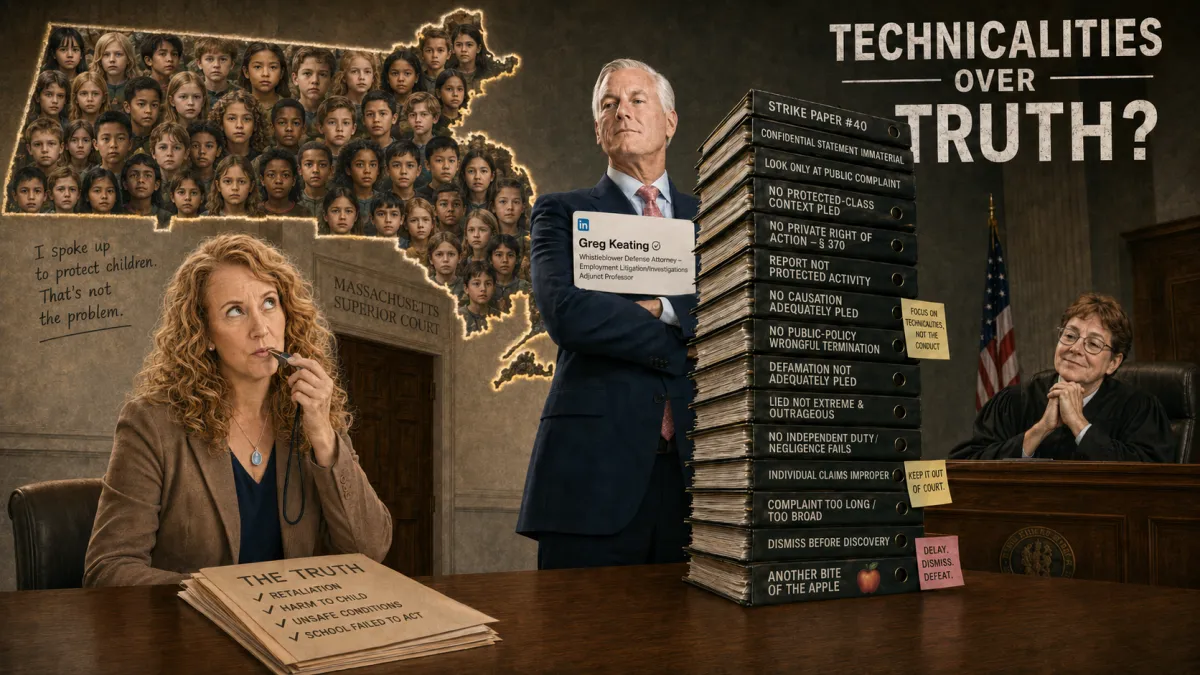
MacMillan also argues that, if the court believed Count V was imprecisely labeled, she should have been allowed to clarify it. At the hearing, she expressly asked for leave to amend if the court thought Count V’s wording was imprecise. The judge responded that MacMillan would not get “another bite at the apple.”
In plain English: the judge ruled that MacMillan could not sue directly under the anti-bullying statute. MacMillan argues that she was not trying to sue directly under that statute, but to use the school’s statutory duties as evidence of negligence and failure to protect.
Why this Matters Beyond this Case
This count raises a basic public question: what happens when a school is required to investigate bullying and retaliation, but the school does not investigate?
A reporting law only works if reports trigger action. If a teacher reports student mistreatment and the school does not investigate, the report can disappear into institutional silence. The child may not be protected. The parents may not be told the full truth. The teacher may be isolated or blamed. The institution may then claim there was nothing to investigate because no official investigation ever substantiated anything.
That is the danger MacMillan is trying to name.
A school’s duty to investigate is not a technicality. It is the bridge between hearing about harm and stopping it.
For teachers, the concern is practical: if the law requires them to report, but the school can refuse to investigate and then punish the reporter, the reporting system becomes unsafe. A teacher cannot protect children if the act of reporting makes the teacher the target.
For families, the concern is equally serious: children are not protected by policies on paper. They are protected when adults respond to reports with honesty, investigation, and accountability.
This count also matters because schools control much of the evidence. Teachers may know what happened, but they are bound by student confidentiality. Parents may know only part of the story. Boards may hear only what administrators tell them. Without a real investigation, the institution’s version of events can become the only version with official status.
Press Quotes By MacMillan
“An anti-bullying policy is only meaningful if the school actually investigates reports.”
“A school should not be able to avoid parent notification by refusing to investigate the bullying in the first place.”
“If teachers are required to report bullying, schools must not be allowed to make the report disappear.”
“Failure to investigate is not neutral. It protects the institution and leaves children and teachers exposed.”
“A school’s duty to investigate is the bridge between hearing about harm and stopping it.”
“Children are not protected by policies sitting in a handbook. They are protected when adults act.”
Why Dismissal Before Discovery Matters In This Case
The timing of the dismissal is especially consequential because this lawsuit is, at its core, about a report that MacMillan alleges was never meaningfully investigated.
MacMillan alleges that she reported bullying and administrative failure to respond; that the school did not investigate the report as required by Massachusetts anti-bullying law; that the Board did not conduct an independent investigation after parents raised concerns; and that the Massachusetts Commission Against Discrimination accepted the school’s framing without calling key witnesses or fully testing the factual record.
Because the Superior Court dismissed the case before discovery or trial, those factual questions were never tested in court.
That matters because discovery is the stage of a lawsuit where parties can request documents, ask written questions, take depositions, and identify what witnesses know. A trial is where evidence can be presented publicly, witnesses can be questioned, and a factfinder can decide what happened. When a case is dismissed before those stages, the legal system may resolve the case without ever reaching the underlying facts.
In many lawsuits, that may be ordinary. But in this case, the lack of investigation is part of the alleged harm.
Chapter 71, Section 37O is built around reporting, investigation, protection from retaliation, and restoration of safety. It requires schools to have clear reporting procedures, to respond promptly to reports of bullying or retaliation, and to protect people who report bullying or provide information. MacMillan alleges that this system failed at every level: first inside the school, then before the Board, then during the administrative process, and finally when the court dismissed the case before discovery.
For students, families, teachers, and journalists, this is the public-interest significance of the case:
A teacher says she reported bullying.
The school says her claims do not create legal liability.
The court dismissed the case before discovery.
As a result, the central report of bullying, the alleged retaliation, and the school’s alleged failure to investigate remain untested by witnesses, documents, depositions, or trial.
That is why this case matters beyond one teacher’s employment dispute. It raises a larger question about whether anti-bullying laws can function if a school’s failure to investigate is never itself investigated.
Please Send Updates Straight to My Inbox
Receive occasional updates about the MacMillan v. Kingsley Montessori School case, including new public filings, educational explanations, website updates, and press materials.
Email is required. Phone is optional if you would also like text-message updates.
Bullying Accountability
Child Safety • Teacher Protection • Institutional Responsibility
© 2026 Bullying Accountability. All rights reserved.