Bullying Accountability
Child Safety • Teacher Protection • Institutional Responsibility
A public-interest site documenting bullying-related institutional failures, retaliation against reporters, and the need for accountability in schools and other child-serving systems.
About Bullying Accountability
Bullying Accountability was created to make visible a problem that is often hidden inside child-serving institutions: what happens when reports of bullying or student safety concerns are treated as threats to reputation instead of calls for protection.
The site began with MacMillan v. Kingsley Montessori School, a Massachusetts case involving allegations that a teacher reported serious bullying concerns, that those concerns were not meaningfully investigated, and that the reporting teacher was later retaliated against. But the questions raised by the case reach beyond one school.
Who protects children when adults disagree about what happened?
Who protects teachers when they report harm in good faith?
Who tests an institution’s version of events when the institution controls the internal record?
Why This Work Matters
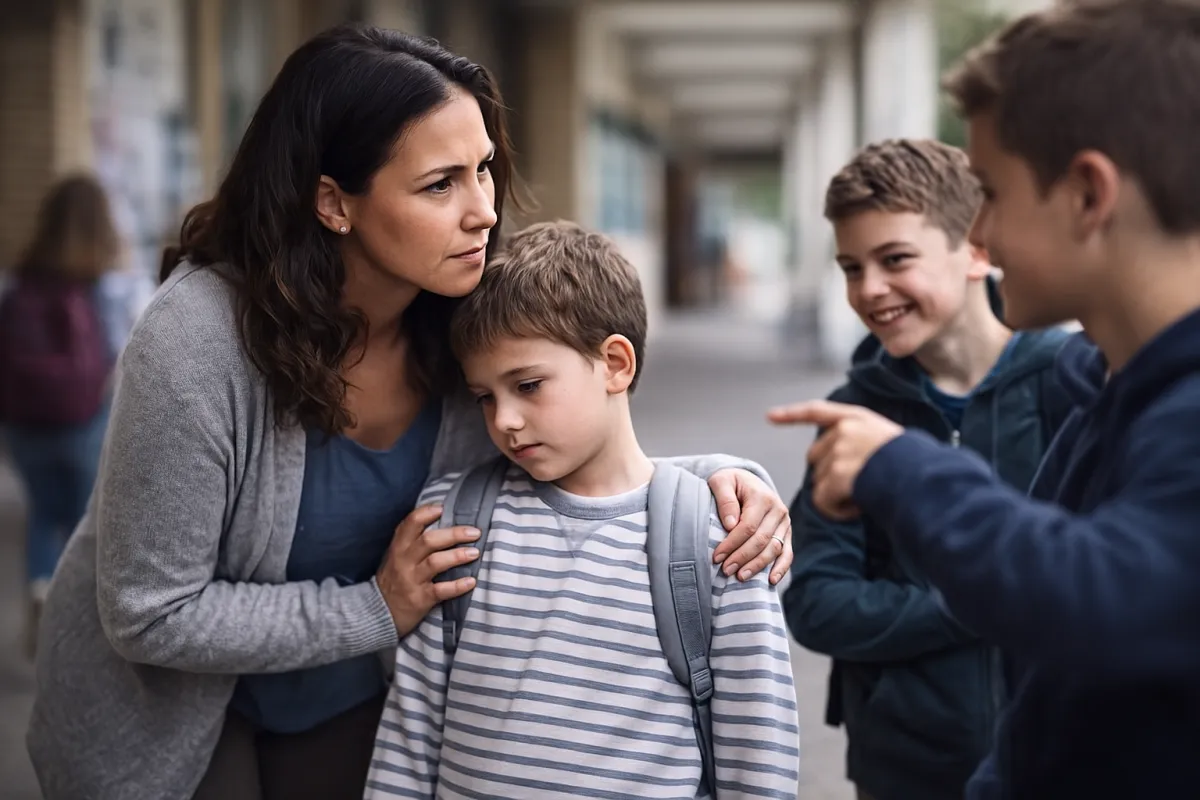
Children often cannot fully explain what is happening to them. They may not have the language, power, confidence, or social position to name harm clearly, especially when bullying is relational, repetitive, or shaped by adult dynamics outside the classroom.
That is why adult response matters.
When a teacher raises concerns about bullying, the safest institutional response is not silence, defensiveness, or retaliation. It is careful investigation, lawful documentation, communication with appropriate parties, and protection for those who report in good faith.
Bullying Accountability exists to support that standard.
Why Teacher Protection Is Child Protection
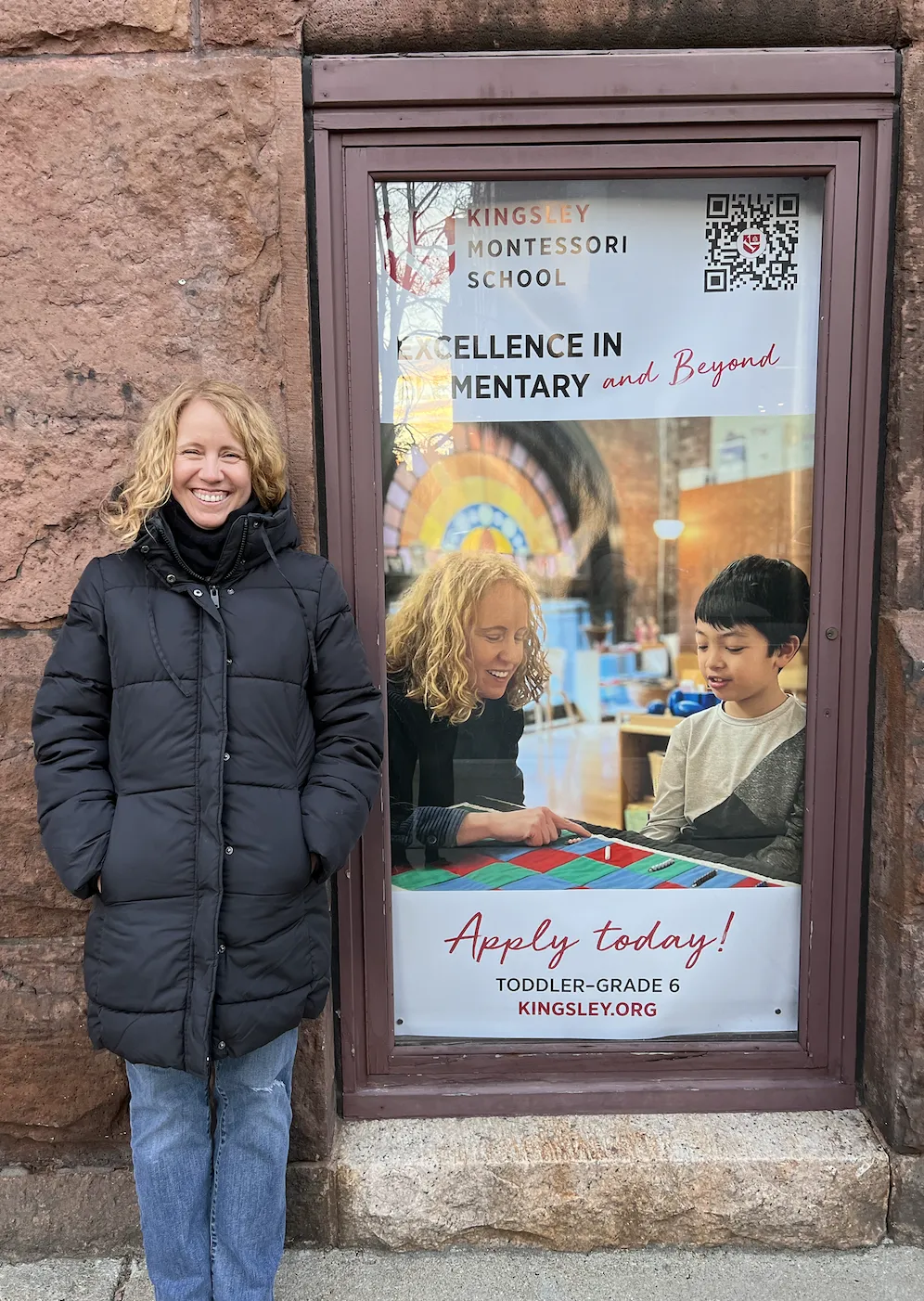
Plaintiff Anne MacMillan standing on Exeter Street in Boston beside a Kingsley advertisement featuring her teaching in March 2023. The complaint alleges that retaliation was already underway at this time. Only weeks later, MacMillan was terminated — in the middle of the school year.
Teachers are often the first adults to see patterns that administrators, boards, parents, and outside agencies may never witness directly. They see classroom relationships over time. They see exclusion, fear, avoidance, changes in behavior, and the difference between an isolated conflict and a pattern of harm.
If teachers are afraid to speak, children are less safe.
This is especially concerning in independent schools, where teachers may work under annual appointment systems, internal reporting channels may be unclear, and institutional reputation may carry significant financial weight. In those environments, a teacher who reports bullying may also be risking employment, reputation, and professional relationships.
Protecting reporting teachers is not separate from protecting children. It is one of the conditions that allows child safety concerns to come to light.
What This Site Provides
This site brings together case materials, narrative context, timeline summaries, key excerpts, and public updates related to bullying accountability, teacher protection, and institutional responsibility.
The goal is to help readers understand the issues without requiring them to begin by reading long legal filings. The documents remain available for those who want to review the underlying record, while the surrounding pages help explain why the allegations matter.
About Anne MacMillan
Anne MacMillan is an educator, Montessori teacher, neurodiversity advocate, and founder of Bullying Accountability.
Her commitment to this work is both professional and personal. Anne comes from a neurodiverse family, and her two autistic siblings experienced severe bullying in childhood that affected their development and continued to shape their adult lives. That history helped form her belief that vulnerable children need adults who are willing to notice harm, name it truthfully, and act even when doing so is difficult.
Anne later became a Montessori educator and worked with children in classroom settings where trust, observation, and developmental understanding were central to her role. After leaving Kingsley Montessori School, she founded R.E.A.L. Neurodiverse™, where she develops educational resources, professional training materials, and an original neurodiverse family systems framework.
Bullying Accountability grew from the intersection of those commitments: child development, teacher ethics, neurodiversity, institutional accountability, and the belief that silence around harm can leave vulnerable children unprotected.
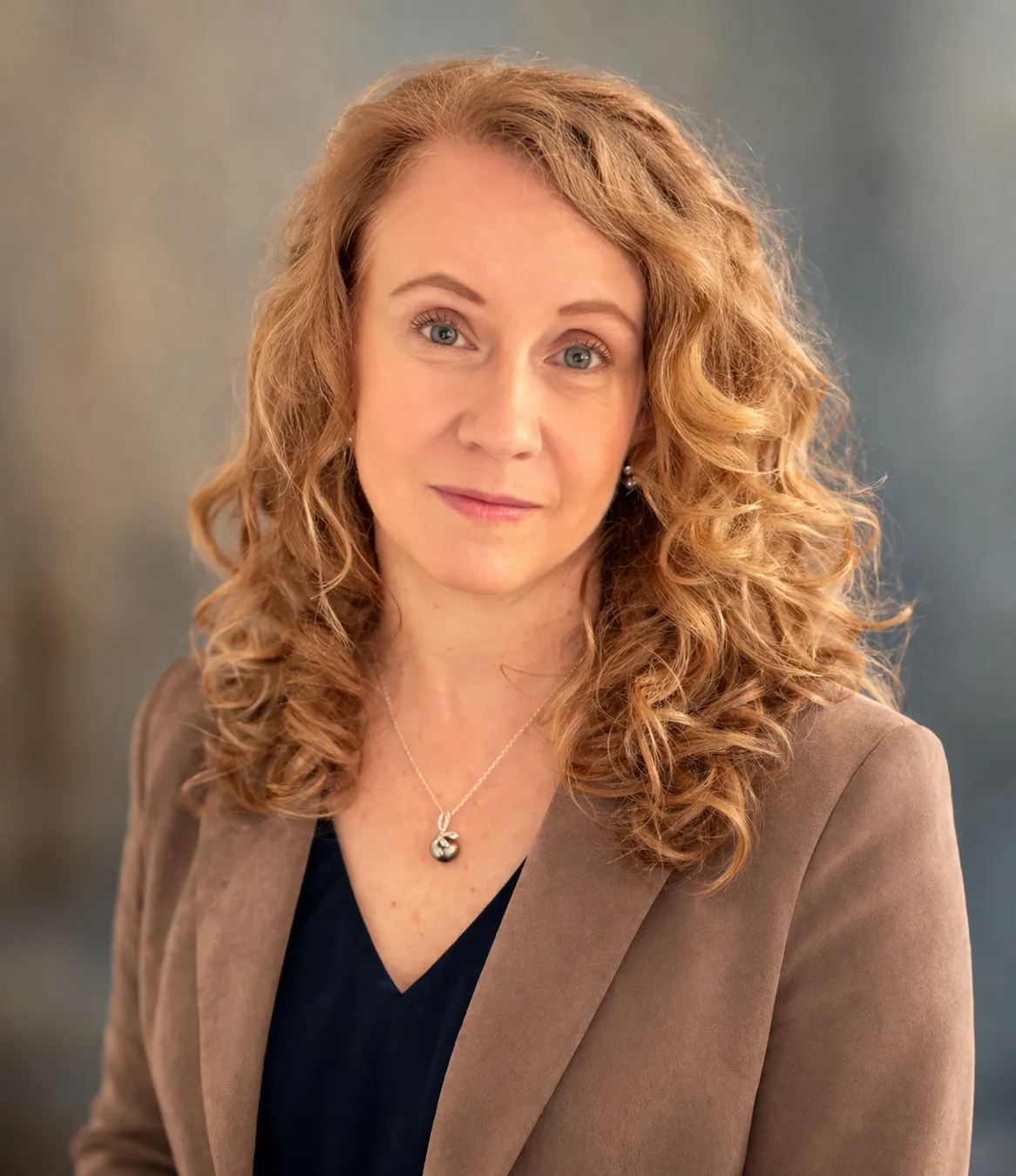
Anne MacMillan, MLA
AMS-Certified Montessorian, trained Ages 3-12
Founder of R.E.A.L. Neurodiverse™
Please Send Updates Straight to My Inbox
Receive occasional updates about the MacMillan v. Kingsley Montessori School case, including new public filings, educational explanations, website updates, and press materials.
Email is required. Phone is optional if you would also like text-message updates.
Bullying Accountability
Child Safety • Teacher Protection • Institutional Responsibility
© 2026 Bullying Accountability. All rights reserved.